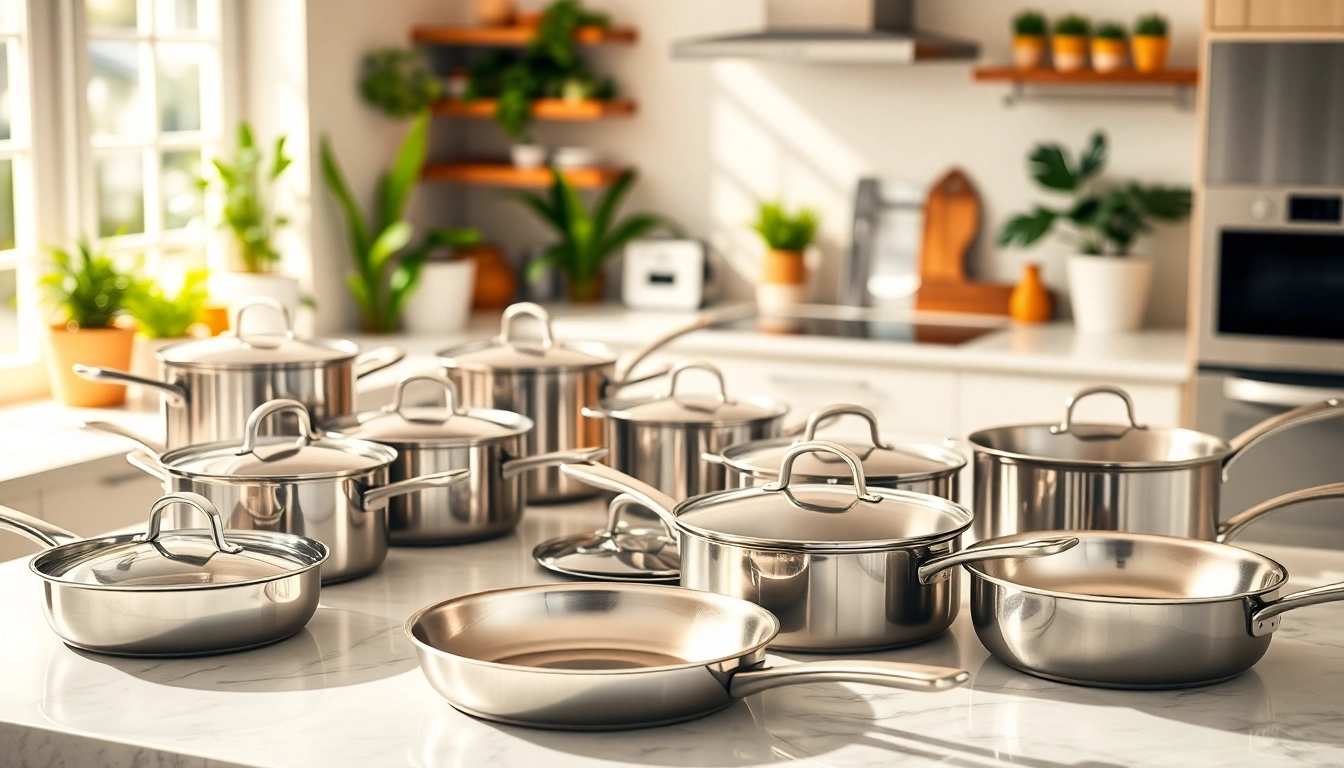
Understanding Cookware Types
What is Cookware?
Cookware refers to a variety of cooking vessels used in food preparation. This category encompasses pots, pans, and kitchen implements designed for various cooking methods including boiling, frying, baking, and roasting. Selecting the right cookware can significantly affect meal quality and cooking efficiency. Anyone who enjoys cooking or baking should pay attention to their cookware choices, as these materials can greatly enhance or hinder culinary endeavors. Explore a range of options in cookware to elevate your cooking experience.
Main Cookware Materials
The material of cookware plays a crucial role in its performance, durability, and maintenance. Here are the most common materials:
- Stainless Steel: Known for its durability and resistance to rust and staining, stainless steel cookware is a popular choice due to its ability to conduct heat evenly.
- Non-Stick: This type of cookware is coated with a material that prevents food from sticking, making it ideal for cooking delicate foods. However, it requires special care to extend its lifespan.
- Cast Iron: Renowned for its excellent heat retention and even cooking, cast iron cookware is often seasoned to create a naturally non-stick surface. It's great for slow-cooking and frying.
- Copper: Copper cookware provides superior heat conductivity, allowing for precise temperature control. It’s often lined with stainless steel to prevent reactions with certain foods.
- Carbon Steel: Similar to cast iron, carbon steel heats up quickly, making it an excellent option for high-heat cooking, such as stir-frying.
Types of Cookware for Different Cooking Methods
Understanding the types of cookware is essential for optimizing cooking techniques. Here’s a breakdown:
- Pots and Saucepan: Great for boiling and simmering. Suitable for soups, sauces, and pasta.
- Frying Pans and Skillets: Ideal for frying, searing, and sautéing because of their broad, flat surface.
- Griddles: Perfect for cooking pancakes, sandwiches, and other foods that benefit from a large flat cooking surface.
- Baking Dishes: Used for dishes that are baked in the oven; they come in various materials including ceramic and glass.
- Woks: Traditionally used in Asian cooking, woks are excellent for stir-frying due to their shape that allows for high-heat cooking and even distribution.
Choosing the Right Cookware for Your Kitchen
Assessing Your Cooking Style
Your cooking style should guide your cookware selection. If you enjoy quick meals, lightweight non-stick or stainless steel options may suit you. For slow-cook enthusiasts, consider heavy-duty cast iron or enamel-coated pans. Further, those looking to experiment with new cuisines might want a versatile collection including woks and roasting pans.
Cookware Sizing and Storage Considerations
Choosing the right size cookware is vital. A large pot may be necessary for family meals, while a smaller pan is ideal for one or two servings. Additionally, consider your storage space. Stackable cookware or items with interchangeable lids can save space, while wall-mounted racks can display beautiful pots and pans.
Material Durability and Maintenance
Durability varies across materials. For instance, stainless steel is highly durable and easy to maintain, while non-stick requires careful handling to avoid damaging the surface. Understanding each material's longevity and upkeep can guide your purchases. If you're seeking longevity, cast iron is a timeless investment if treated correctly. However, for those desiring convenience, non-stick options may be preferred.
Essential Cookware for Every Home Cook
Key Pieces to Start Your Collection
A basic collection may include:
- A medium-sized saucepan for cooking grains and sauces.
- A large pot for soups, stews, and pasta.
- A skillet or frying pan for sautéing and frying.
- A baking dish for oven-cooked meals.
Best Cookware Sets for Beginners
For those just starting out, investing in a cookware set can be cost-effective and practical. A well-rounded set typically includes a combination of pots, pans, and occasionally specialty pieces, offering versatility for most cooking tasks. It’s advisable to choose sets that include a mix of material types to experiment with different cooking techniques.
Non-Toxic and Eco-Friendly Options
As health-conscious cooking becomes more popular, many are opting for non-toxic cookware options. Look for materials like ceramic, stainless steel, or seasoned cast iron that do not leach chemicals into your food. Additionally, eco-friendly brands prioritize sustainable materials and manufacturing processes, making them a suitable choice for environmentally aware consumers.
Maintaining and Caring for Your Cookware
Cleaning Methods for Different Materials
Cookware maintenance is essential for longevity. Here are cleaning tips for each material:
- Stainless Steel: Use warm, soapy water and a soft sponge. For stubborn stains, a mix of baking soda and vinegar can help.
- Non-Stick: Avoid metal utensils; opt for silicone or wood. Clean gently with a non-abrasive sponge to maintain the surface.
- Cast Iron: Hand wash without soap, dry immediately, and apply a thin layer of cooking oil to maintain the seasoning.
- Copper: Use a copper cleaner or a mixture of lemon juice and baking soda to keep it shiny.
- Carbon Steel: Clean similarly to cast iron, ensuring it dries completely to prevent rust.
Tips for Extending the Life of Your Cookware
To prolong the lifespan of your cookware, always follow the manufacturer’s care instructions. Using proper utensils suited for each surface type is vital. Regularly inspect for scratches or warps and avoid using high heat on non-stick appliances. Allow cookware to cool down before washing to prevent warping.
When to Replace Your Cookware
Knowing when to replace cookware is just as important as purchasing it. Signs include warped surfaces, persistent scratches in non-stick pans, and rust in cast iron. Check for any serious damage; replacing cookware can ensure safe cooking practices and optimal food quality.
Frequently Asked Questions about Cookware
What are the best cookware materials?
The best cookware materials are stainless steel, cast iron, and non-stick. Each serves different cooking needs, so it's ideal to have a mix for versatility.
How do I choose cookware for induction stoves?
Choose cookware made from magnetic materials like stainless steel or cast iron. Ensure the base is flat for even heating and optimal functionality on induction stoves.
Is non-stick cookware safe to use?
Yes, most modern non-stick cookware is safe if used correctly. Avoid overheating and using metal utensils to maintain the coating's integrity.
What is the difference between cookware and bakeware?
Cookware is typically used on the stovetop, while bakeware is designed for oven use. Cookware includes pots and pans, whereas bakeware includes items like pie dishes and baking sheets.
How can I prevent my cookware from scratching?
Use wooden or silicone utensils to avoid scratching non-stick surfaces. Avoid stacking the cookware without protection, and store it carefully.