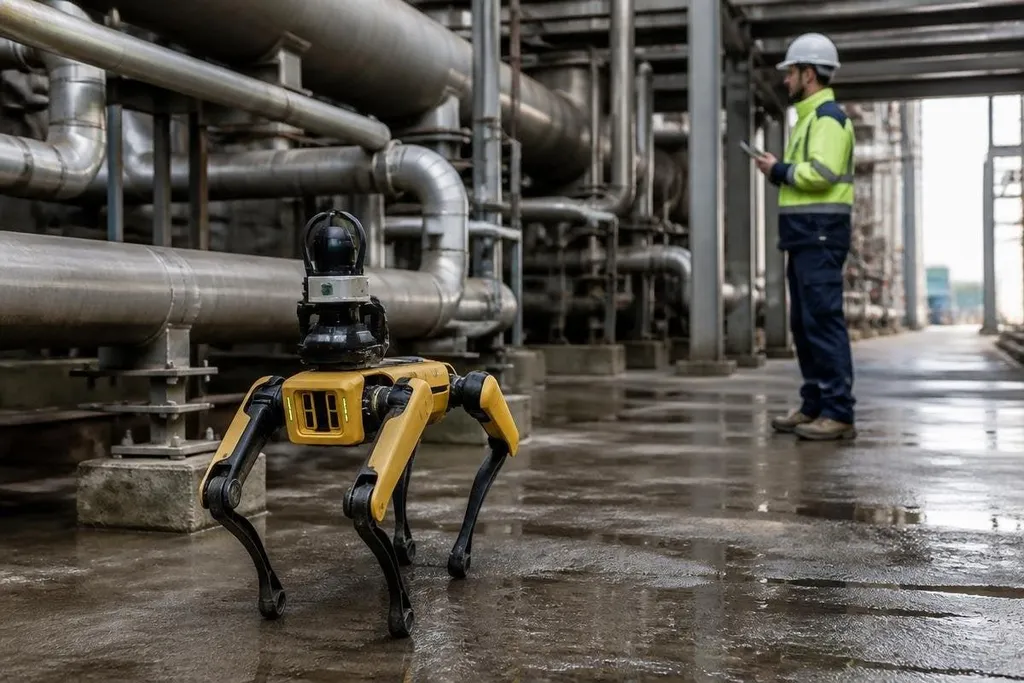
Maintenance robots are taking on inspection, sensing, and routine repair work in places that are hard or unsafe for people to reach. Their main value comes from giving maintenance teams better information before a small fault stops a machine.
Quick read
- Inspection robots can check hot, dusty, wet, or confined areas while a worker stays outside the hazard zone.
- Sensors can collect images, sound, heat readings, and other condition data during scheduled rounds.
- A robot still needs a person to set the task, judge the result, and approve most repairs.
Where the robots fit
Industrial maintenance covers more than replacing worn parts. A team may inspect pipes, tanks, conveyor lines, electrical areas, storage spaces, or large machines. On a set route, the robot can collect sensor data and send the findings to a worker for review.
Ground robots work well on floors, roads, and plant corridors. Aerial robots can inspect roofs, towers, and other high points without sending a worker up first. Robotic arms can hold cameras, probes, or tools beside equipment that is fixed in place.
The task decides the robot design. A wheeled robot may suit a smooth factory floor, while a tracked system may handle loose ground. With a camera, the robot can check a surface, while thermal sensing can also show heat patterns that a normal image misses.
That data changes the work order. A technician can plan the parts, tools, and access method before reaching the machine. The visit becomes more focused because the team has a record of what the robot saw and where it saw it.
How the work changes for people
Robots do not remove the need for maintenance workers. They shift some work from walking inspection routes toward planning, remote review, fault checks, and repair decisions.
A worker may control the robot from a safe room, review its images, or send it back to a point that needs a closer look. In some systems, the robot follows a planned route on its own, while a person steps in when the route changes or the data needs judgment.
The change also affects training. Maintenance staff need to understand the equipment, but they may also need to manage robot routes, check sensor quality, label faults, and connect findings to a maintenance system.
A poor scan can send a team after the wrong fault, so the robot’s data needs a clear review step.
The review step also depends on knowing what the robot scanned and which fault it flagged. Reports on maintenance robots at Robot24.com can place those details beside the test setting before the next section weighs the limits that decide whether the scan helps on the factory floor.
The limits that decide the result
The robot can collect data without understanding the whole problem. A dark surface can weaken an image, a blocked route can stop an inspection, and a sensor can report a reading that needs skilled review.
Repairs bring a second limit. Inspection is easier to automate than work that needs force, careful part handling, or a change in procedure. The robot may carry a tool to the right place, but a person may still need to confirm the repair and check the machine afterward.
The site itself matters. Steps, narrow doors, poor lighting, wireless dead spots, moving vehicles, and wet floors can change the task. A robot that works in one plant may need new routes, guards, sensors, or software in another.
I’d start with inspection rounds that are repeated, costly, or risky, then measure the result before adding repair work. That gives the team a clear task and a record it can compare with its old method.
A practical buying checklist
Before a pilot, check these points:
- Name the route: list the places the robot must reach, including doors, stairs, floor changes, and areas with weak network coverage.
- Set the sensor need: decide if the task calls for visual images, thermal readings, sound, gas sensing, or another measurement.
- Keep a human review: assign the person who will check the data, confirm a fault, and approve the work order.
- Test the failure case: plan what happens when the robot loses contact, meets an obstacle, or returns poor data.
- Measure the old method: record inspection time, repeat visits, missed faults, and worker exposure before the pilot starts.
- Plan the handoff: make sure findings can reach the maintenance system and the worker who will fix the equipment.
The next useful step is a narrow pilot with one route and one clear result, such as fewer repeat visits or better records of equipment condition. Once that record exists, the plant can decide if a robot belongs on a second route or stays where it started.