Understanding Bridge Cranes
In modern industrial environments, the effective handling of materials is vital for operational efficiency. One key piece of equipment that facilitates this is the bridge crane, a crucial tool that allows for the lifting and movement of heavy loads across significant spans. This overview will delve into what bridge cranes are, the various types available, and their applications across diverse industries.
What is a Bridge Crane?
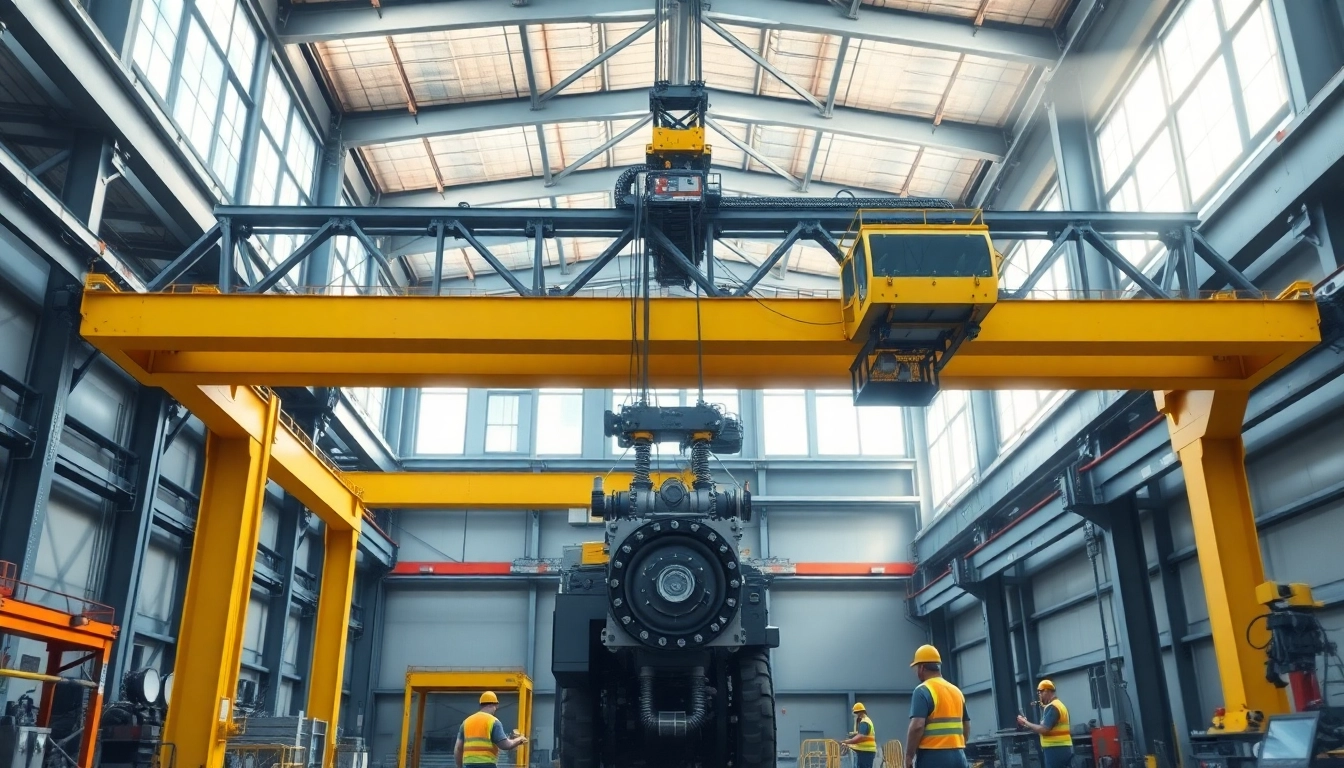
A bridge crane, often referred to as an overhead crane, consists of a hoist that travels along a bridge beam, which is supported by two runway beams. This configuration allows for efficient load handling over a large area of the workspace, making them indispensable in warehouses, manufacturing plants, and assembly lines. The design facilitates both vertical and horizontal movement, enhancing productivity and safety.
Types of Bridge Cranes
Bridge cranes come in several varieties, each tailored to meet specific operational demands:
- Single Girder Bridge Cranes: Suitable for lighter loads, these cranes are cost-effective and require less space. They are typically used in smaller warehouses and workshops.
- Double Girder Bridge Cranes: Designed for heavier lifting, these cranes provide greater stability and can accommodate larger hoists. They are ideal for manufacturing settings where heavy equipment is frequently moved.
- Freestanding Bridge Cranes: These cranes offer flexibility as they do not require support from the building structure. They are easily configurable and can be relocated, making them an excellent choice for dynamic workspaces.
- Workstation Bridge Cranes: Designed for ergonomic and efficient loading, these cranes improve user experience and minimize strain. They are commonly used in assembly and maintenance areas.
Applications in Various Industries
Bridge cranes play a pivotal role in a myriad of industries:
- Manufacturing: Used to move raw materials and finished products, bridge cranes streamline production lines and reduce manual handling.
- Construction: Essential for lifting heavy materials and equipment on construction sites, ensuring safety and efficiency.
- Shipping and Logistics: Facilitate the quick loading and unloading of cargo, thus optimizing supply chain operations.
- Aerospace: Capable of handling delicate components with precision, bridge cranes are vital in this high-stakes industry.
Key Components of Bridge Cranes
Structural Elements Explained
The integrity and performance of bridge cranes rely on several structural components:
- Bridge Beam: The main horizontal component that supports the hoist and connects the two runways.
- Runway Beams: These beams support the bridge crane and provide a track for its movement.
- Hoist: The device that raises and lowers loads, which can be electric or manual, depending on the operational requirements.
- End Trucks: Located at both ends of the bridge beam, these components house wheels that allow the crane to travel along the runway.
Essential Safety Features
Safety is paramount in crane operations. Here are some essential features that enhance safety:
- Overload Protection: Prevents lifting beyond the crane's rated capacity, reducing the risk of accidents.
- Limit Switches: Ensure that cranes stop at designated points, preventing collisions.
- Emergency Stop Buttons: Allow for immediate cessation of crane operation in case of emergencies.
- Safety Latches: Prevent slippage of the load during lifting and transportation.
Advanced Control Systems
Modern bridge cranes are equipped with sophisticated control systems that improve usability and efficiency:
- Remote Controls: Allow operators to manage the crane from a safe distance, improving safety and visibility.
- Smart Technology: Systems that provide real-time data on load weight, crane positioning, and operational performance.
- Automated Controls: Enable programmed movements, which can significantly reduce labor costs and increase accuracy.
Benefits of Using Bridge Cranes
Efficiency Improvements
Bridge cranes enhance operational efficiency by allowing for smooth and swift material handling. Their ability to cover vast spaces with minimal manual intervention reduces downtime and optimizes workflow processes.
Cost-Effectiveness in Operations
While the initial investment in bridge cranes can be significant, their long-term benefits often lead to substantial savings. They reduce labor costs through automation and minimize damage to materials, thereby enhancing the overall return on investment.
Improved Workplace Safety
By minimizing manual lifting and transporting of heavy loads, bridge cranes significantly reduce workplace injuries. Their safety features further enhance the protection of workers and goods, creating a safer working environment.
Comparison with Other Crane Types
Bridge Crane vs. Gantry Crane
While both bridge cranes and gantry cranes serve similar purposes, they differ in design and functionality. Gantry cranes typically have a frame that supports the hoist and can travel on wheels, allowing for greater mobility outside of industrial buildings. In contrast, bridge cranes offer more stable support but require a permanent structure for installation.
When to Choose a Bridge Crane?
Selecting a bridge crane over other types often depends on the specific needs of an operation:
- Choose a bridge crane if you have a fixed workspace needing extensive load coverage.
- If the loads are particularly heavy and require stability, a double girder bridge crane is preferable.
- Consider if your operations require frequent lifting and movement of heavy equipment within a confined space.
Performance Metrics for Crane Types
When evaluating the performance of bridge cranes versus other crane types, consider metrics such as:
- Load Capacity: Bridge cranes generally offer higher load capacities than jib cranes but may fall behind in flexibility compared to gantry cranes.
- Speed: The operational speed of bridge cranes can be faster, which is crucial for high-volume applications.
- Maintenance Costs: Assess the long-term maintenance costs associated with each type to determine overall cost-efficiency.
Future Trends in Bridge Crane Technology
Emerging Innovations for 2025
As industries evolve, so does crane technology. Key trends expected to influence bridge crane development by 2025 include:
- Integration of IoT: The Internet of Things (IoT) will enable smarter cranes that provide real-time analytics and predictive maintenance alerts.
- Enhanced Materials: The use of stronger yet lighter materials in construction will improve load capacities and reduce energy consumption.
- Modular Designs: Increasing demand for flexibility will lead to cranes designed for easy reconfiguration to adapt to changing operational needs.
Sustainability in Crane Design
Sustainability will play a crucial role in the future of bridge cranes. Manufacturers will focus on creating energy-efficient models, utilizing recyclable materials, and incorporating designs that minimize environmental impact.
The Impact of Automation
Automation is set to revolutionize the operation of bridge cranes. With advancements in AI and machine learning, cranes will become increasingly autonomous, allowing for even greater efficiency and safety in material handling.